The Darkest White
By Eric Blehm
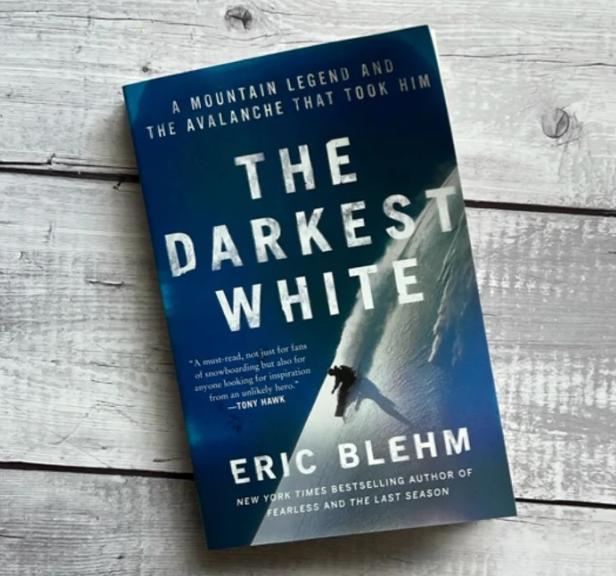
As a backcountry skier, I am always drawn to books about those who ride the “white dragon” that is the winter environment. Eric Blehm tells the story of legendary snowboarder Craig Kelly who put the sport on the map with his unlimited talent and then took his fluid style from the half-pipes and competitive slopes to the backcountry. The book is well-written and provides a glimpse into the start of this once burgeoning sport with Kelly setting the standard for its future stars. There are some applicable lessons buried in his life story.
A Few of My Favorite Excerpts
…Or, as in the words of Zdarsky, “Snow is not a wolf in sheep’s clothing, it is a tiger in a lamb’s clothing.”
It’s braver and more honorable to turn back than to forge forward into uncertain terrain…Snowboarding is about living, not about dying. – Craig Kelly
Buffery agreed with Craig when he told him the lesson he’d learned (while in low visibility/whiteout) was that sometimes the best thing you can do is nothing. You had to bottle the energy of fear, the impulse to do something, and learn to suffer a near-total loss of control.
After taking a hazardous attitude survey, he wrote, “When faced with a risk-taking scenario in the future I will probably have this survey pop into my head…If there is nothing to gain by taking the risk, I have been programming myself to simply not even consider it.”
“Guides are inherently problem solvers and want to show their clients a good time,” says Sayer. “We believe that we can keep people safe out there—otherwise, we wouldn’t be guides.”
Craig had learned that intuition, terrain choice, probing, and deep, stable snow were the best defense, and that the old-school stability tests on a slope weren’t just unreliable, they were deceiving. Several incident reports Craig had read were cautionary, detailing individuals who had trusted results of a stability test regarding the slope that then killed them. Just six weeks earlier, Craig had both identified his future killer and predicted the circumstances. “I’m learning more and more that the errors, which are made in snowpack judgement, are due to spatial variability,” he’d told Ari Marcopoulos. “In light of that…most avalanches occur in the presence of trained people [who] knew the dangers were there. They knew it was possible for a place to slide, but…went anyway. It could be they forgot, but most commonly it’s social pressure, or human factors within the situation that causes trouble.”