Grit: The Power of Passion and Perseverance
By Angela Duckworth
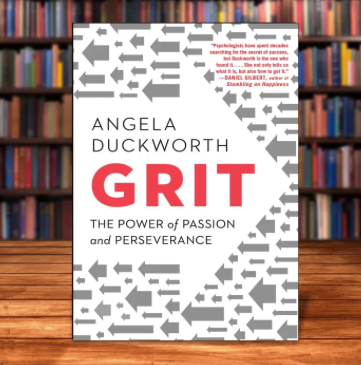
I came upon Angela Duckworth’s book in 2021 as the world was emerging from the pandemic lockdown. I was attracted to it as I watched the young people I was mentoring and leading struggle with the outcomes of a world in physical isolation and the increased artificial connection through screens. The book became the basis of one of the “commencement” addresses I gave during the annual Graduation River Trip to celebrate the student staff and graduating seniors of the Fort Lewis College’s Outdoor Pursuits Program.
A few of my Favorite Excerpts…
Characteristics of Paragons of Grit:
- They have a “never give up” attitude.
- It is critically important to keep going after failure
- They are unusually resilient and hard working.
- They know in a very deep way what it was they want and they not only have determination, but have direction.
How talented someone is, says nothing about their grit, and vice versa.
In the most general sense, talent is the sum of a person’s abilities—his or her intrinsic gifts, skills, knowledge, experience, intelligence, judgement, attitude, character, and drive. It also includes his or her ability to learn and grow.
Grit is about working on something you care about so much that you’re willing to stay loyal to it…It’s doing what you love, but not just falling in love—staying in love.
Passion should be used as a compass—that thing that takes you some time to build, tinker with, and finally get right, and that then guides you on your long and winding road to where, ultimately, you want to be.
Do you have a life philosophy? What do you want?
Psychological assets that mature paragons of grit have in common:
Interest—passion begins with intrinsically enjoying what you do.
Practice—one form of perseverance is the daily discipline of trying to do things better than we did yesterday. You want to improve.
Purpose—What ripens passion is the conviction that your work matters. It is therefore imperative that you identify your work as both personally interesting and, at the same time integrally connected to the well-being of others.
Hope—a rising to the occasion kind of perseverance. It is inestimably important to learn to keep going even when things are difficult, even when we have doubts.
Research shows that people are enormously more satisfied with their jobs when they do something that fits their personal interests. Second people perform better at work when what they do interests them.
Employees whose intrinsic personal interests fit with their occupations do their jobs better, are more helpful to their coworkers, and stay at their jobs longer.
Interests are not discovered through introspection. Instead, interests are triggered by interactions with the outside world. The process of interest discovery can be messy, serendipitous, and inefficient….What do I like to think about? Where does my mind wander? What do I really care about? What matters most to me? How do I enjoy spending my time? And in contrast, what do I find absolutely unbearable? If you find it hard to answer these questions, try recalling your teen years, the stage of life at which vocational interests commonly sprout.
The true joy in life is to be a force of fortune instead of a feverish, selfish little clod of ailments and grievances complaining that the world will not devote itself to making you happy. - George Bernard Shaw
To be gritty is to keep putting one foot in front of the other. To be gritty is to hold fast to an interesting and purposeful goal. To be gritty is to invest, day after week after year, in challenging practice. To be gritty is to fall down seven times and rise eight.
We all recognize effortless entertainment is the enemy of long-term passion and perseverance.